
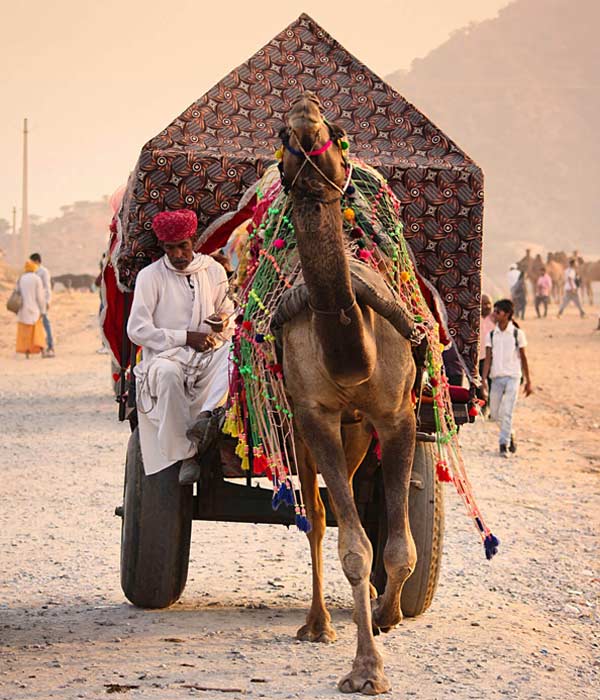
Few places in the world are as photogenic as the Pushkar Camel Fair. Thousands of decorated camels, herders in bright turbans, golden desert light and a holy lake lined with temples make it a dream for photographers. This guide covers the best spots, the best times and how to photograph people respectfully at Pushkar Fair 2026 (17–24 November).
When to shoot
- Come early in the fair. The first days (17–20 November) are when camel and livestock trading is at its peak. Herders and their animals fill the dunes and there are fewer tourists.
- The later days (21–24 November) bring competitions, hot air balloons, the Deepdaan on the ghats and Kartik Purnima. These are great for colour and crowds, but busier.
- Sunrise is best for portraits and camp life, as herders light fires, brew chai and tend their camels.
- Sunset is best for silhouettes, wide desert shots and the camel caravans heading back to camp.
- Midday light is harsh. Use it to rest, eat and explore the town.
Best photography spots at Pushkar Fair
1. The camel dunes around the Mela Ground
The heart of the fair. Walk out onto the dunes at first light to find herders’ camps, camels being groomed and decorated, and chai on the fire. This is where you will get your most authentic shots of desert life.
2. The Mela Stadium
The fair’s competitions and performances take place here: camel decoration, turban tying, the moustache contest, folk dance and races. A telephoto lens helps you fill the frame from the stands.
3. Pushkar Lake and the ghats
The ghats of Pushkar Lake glow at sunset, and on Deepdaan evening thousands of diyas are lit along the water. Please remember that photographing people bathing is strictly not allowed. Shoot the lake, the temples and the lamps, not the pilgrims in the water, and remove your shoes on the ghats.
4. Hilltop views over Pushkar
For a wide view of the town, lake and fair, climb or take the ropeway up to Savitri Mata Temple, or head up Nag Pahar. Sunrise from the top is spectacular, and from up there the hot air balloons over the dunes give a sense of scale.
5. The old town and bazaars
Pushkar’s lanes are full of painted walls, small temples, sadhus, flower sellers and stalls of silver jewellery and textiles. Look for the Brahma Temple and Rangji Temple from outside, and for street food stalls frying malpua.
Photography etiquette
- Always ask before photographing people. A smile and a gesture towards your camera is usually enough, and the conversation often leads to better portraits.
- Some herders and performers may ask for a small tip in return for a photo. Decide beforehand whether you are comfortable with that, and keep small change handy.
- If someone offers you chai, accept it. Spending time with people builds trust and gives you more natural images.
- Photography is often not allowed inside temples. Follow the signs and ask the priests.
- Pushkar is a holy town. Dress modestly and be respectful during rituals and aarti.
- Flying a drone needs permission from the authorities. Never fly over crowds or animals.
Gear and camera settings
- Lenses: a telephoto zoom (around 70–200 mm) for portraits and competitions, and a wide-angle lens for the dunes, camps and lake.
- Fast shutter speeds (1/1000 s or faster) to freeze camel and horse races.
- Protect your gear from dust. The sand gets everywhere, so carry a lens cloth, a blower and a bag cover, and avoid changing lenses in the wind.
- Spare batteries and memory cards. Cold mornings drain batteries quickly, and you will shoot more than you expect.
- Phone photographers: use portrait mode for people, shoot into the light at sunset for silhouettes, and tap to lock exposure on bright skies.
A simple shot list
- A decorated camel close-up, with patterned fur, mirror-work and pom-poms
- A herder portrait with a turban and a long moustache
- A camel caravan silhouetted against the sunset
- Hot air balloons over the dunes at sunrise
- Diyas floating on Pushkar Lake on Deepdaan night
- The view over the town and lake from the hilltop
Plan your trip
See the full Pushkar Fair 2026 schedule to plan which days to shoot, read how to reach Pushkar from Delhi, Jaipur and Ajmer, and explore more places to visit in Ajmer and Pushkar. Share your best shots with us on Instagram @apnaajmer.